The First Hour After a Pipe Bursts in a Salem Home
Short answer
Short answer: shut off the main, then worry about everything else. The order matters more than the speed.
By the Salem Oregon Plumbing Guys team. Reviewed against the Oregon Plumbing Specialty Code (OPSC), based on the Uniform Plumbing Code (UPC), and the permit requirements of the Oregon Building Codes Division.
The instinct when water is actively coming out of a wall or ceiling is to run for towels. That's understandable, and it's the wrong first move. Every minute spent mopping before the water is shut off is a minute of continued flooding, and in a typical Salem home the volume adds up fast: a 1/2 inch supply line at normal residential pressure can put out several gallons a minute. Towels can wait thirty seconds. The main shutoff can't.
Finding that shutoff before an emergency, not during one, is the single most useful five minutes a homeowner can spend. In most Salem houses it's a valve near where the water line enters the house, often in a crawl space access, a utility closet, or near the water meter at the street. If it's genuinely unknown when a pipe lets go, the street-side meter has a shutoff too, though it typically needs a meter key and more effort than most people can manage under pressure. Take the five minutes this week, not during the emergency.
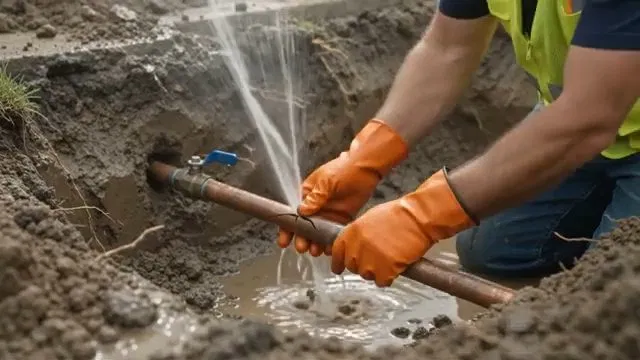
Burst copper water line spraying in trench helps narrow the repair to the part of the system that actually needs attention.
Once the water is off, the next ten minutes go to containment, not repair. Move anything valuable or absorbent, rugs, boxes, furniture, out of the immediate area. If the water reached an electrical outlet, light fixture, or panel, don't touch it, and don't re-enter that specific area until power to it is confirmed off at the breaker. Water and electricity together are a genuine hazard, not a theoretical one, and this is the one place in this whole guide where caution outweighs urgency.
It's worth being honest about what a homeowner shouldn't attempt during this first hour, too. Cutting into drywall or flooring to try to locate the exact source, before a plumber arrives, rarely helps and sometimes makes the eventual repair more complicated by opening up more of the structure than necessary. The goal in the first hour is stopping the water and limiting the damage it can do, not diagnosing the root cause, which is a job better suited to someone who does this daily.
Photograph everything before moving or drying anything, if there's a reasonable chance insurance will be involved. Wide shots of the room, close-ups of the source if it's visible, and a shot of the water line reaching up a wall or across a floor. This takes two minutes and it's much harder to reconstruct later than it is to do in the moment.
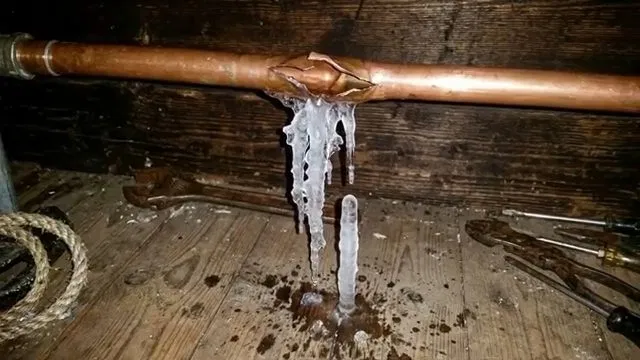
Burst copper pipe with hanging ice gives the plumber a clearer look before the next repair step begins.
Whether to call a plumber immediately or wait until morning comes down to one honest question: is the source actually stopped? If the main is off and the leak was a clean supply line, not a sewer backup, the immediate danger is contained, and a same-day call during business hours is often reasonable rather than a 2am emergency rate. If the main shutoff doesn't fully stop the flow, if the water is Category 2 or 3 (anything touched by a drain or sewer line), or if it's reaching an electrical system, that's the situation that justifies calling immediately regardless of the hour.
Salem's own experience with this is well documented: during the February 2021 ice storm, City of Salem Water Distribution crews spent days responding to frozen-and-burst pipe calls faster than they could keep up, which is a useful reminder that a bad freeze event here produces a lot of these situations at once, not just one house at a time. If a hard freeze is forecast, this is the week to check that crawl space insulation and confirm the main shutoff location, not the week after.
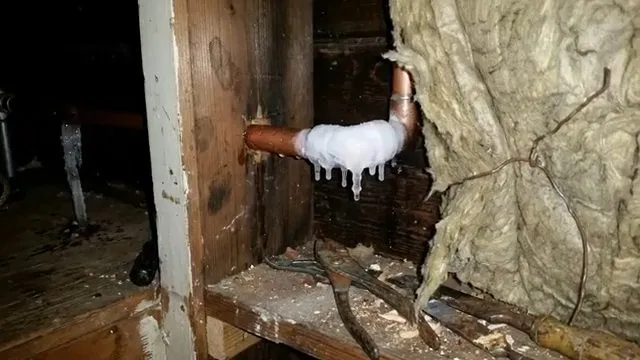
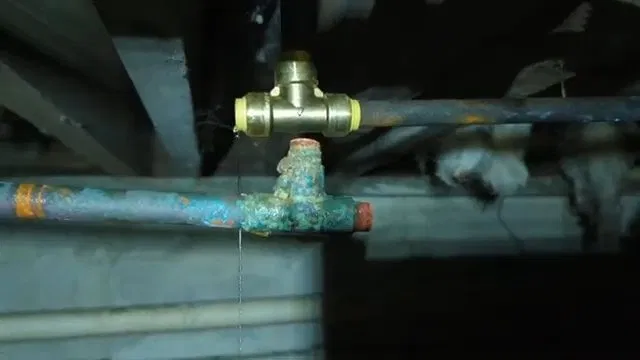
Frozen copper elbow near wall insulation can reveal the condition of the connection before parts are replaced.
Drying starts once the source is confirmed stopped, and it's worth being realistic about what a homeowner can do versus what actually needs equipment. Box fans and open windows help surface moisture on a hard floor. They do very little for water that's soaked into subfloor, insulation, or wall cavities, which is where mold risk actually develops over the following 24 to 48 hours in a warm, enclosed space. That's the point where a professional water damage restoration assessment, with actual moisture meters and industrial air movers, earns its cost over a fan from the garage.
First 10 minutes
Next 20 minutes
Before the plumber arrives
Shut off the main water valve
Move valuables and absorbent items clear
Photograph the damage for insurance
Avoid any area touching power
Confirm breaker is off if water reached wiring
Note whether the water is clean or from a drain
Don't start drying yet
Open windows if it's safe to do so
Have the shutoff location ready to describe
Call immediately rather than waiting, regardless of the hour
Locate the street-side meter shutoff as a backup if the interior valve fails
Keep everyone clear of any area where water is reaching outlets or fixtures
Don't attempt to cut into a wall to find the leak yourself
Should I call my insurance company or a plumber first?
Shut off the water first, then the plumber, since stopping the damage matters more than paperwork order. Insurance can be called once the situation is stable; most policies don't penalize a short delay for handling an active emergency first.
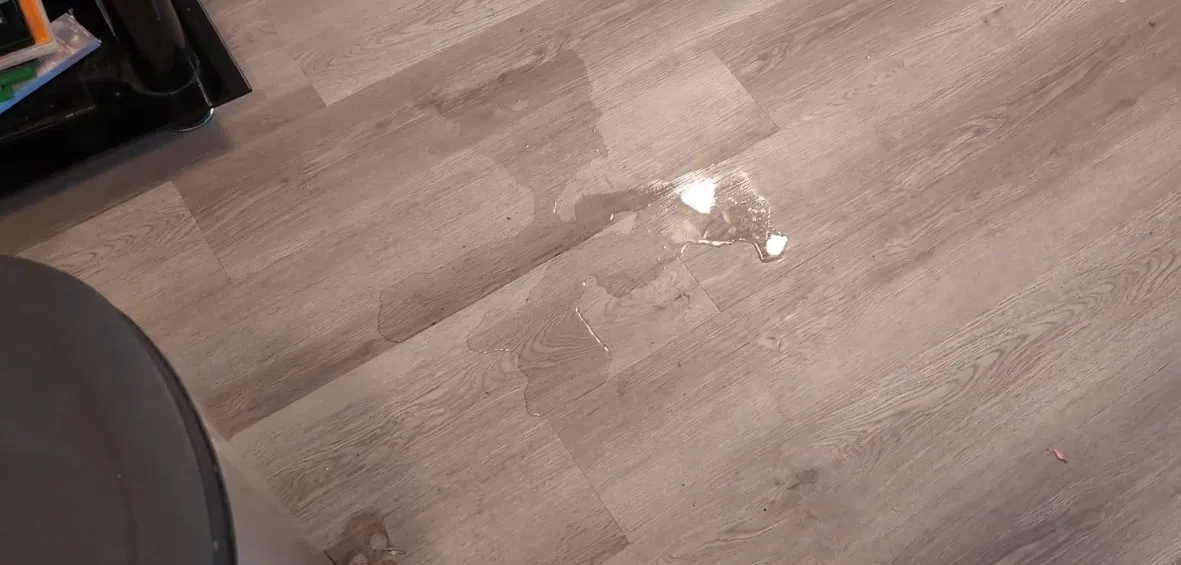
Wet tile floor from slab water leak keeps diagnosis focused so unnecessary opening or replacement can be avoided.
How do I know if it's Category 1, 2, or 3 water?
Category 1 is clean water straight from a supply line. Category 2 has touched a washing machine or dishwasher discharge. Category 3 has touched a sewer line or toilet backup. When in doubt, treat it as the more serious category and avoid direct contact.
Is it safe to use a shop vac on the water myself?
For a small, clearly clean-water spill on a hard floor, yes. For anything reaching an electrical outlet, sitting under a subfloor, or coming from a drain line, wait for someone with the right equipment and training rather than risking a shock or exposure.
How fast does mold actually become a risk?
Commonly cited guidance puts visible mold growth at roughly 24 to 48 hours in a warm, poorly ventilated space with standing moisture, which is why getting professional drying equipment on the space quickly matters more than it might seem in the first hour.
Cutting frozen copper pipe near foundation makes it easier to confirm the problem before the line is put back into service.
Preventing Frozen Pipes Before Salem's Next Hard Freeze
Short answer: insulate exposed crawl space pipe, know where the main shutoff is, and keep cabinet doors open under sinks on exterior walls during a hard freeze. All three are free or nearly free and take under an hour combined.
Short answer: an unexplained jump in the water bill and a meter that keeps moving with everything off are the two signs worth acting on immediately. The rest are supporting evidence.