Garbage Disposal Dos and Don'ts for Salem Kitchens
Short answer
Short answer: cold water, small amounts, no fibrous or fatty waste, ever. Households on septic should also cut overall disposal use more conservatively than city sewer allows.
By the Salem Oregon Plumbing Guys team. Reviewed against the Oregon Plumbing Specialty Code (OPSC), based on the Uniform Plumbing Code (UPC), and the permit requirements of the Oregon Building Codes Division.
A garbage disposal is a genuinely useful appliance when used within its actual limits, and most disposal problems trace back to a small, well-known list of things people put down them that they shouldn't, more than any inherent flaw in the unit itself.
Cold water, not hot, should run during and for about fifteen seconds after using a disposal. Cold water keeps any fat or grease that sneaks in solidified enough to be chopped and flushed through rather than melting into a coating that clings to the inside of the pipe further down the line.
Fibrous foods are the most common cause of a jammed or struggling disposal: celery, corn husks, onion skins, and asparagus ends all contain stringy fibers that wrap around the grinding mechanism rather than breaking apart cleanly. These are worth composting or trashing rather than risking a jam over.
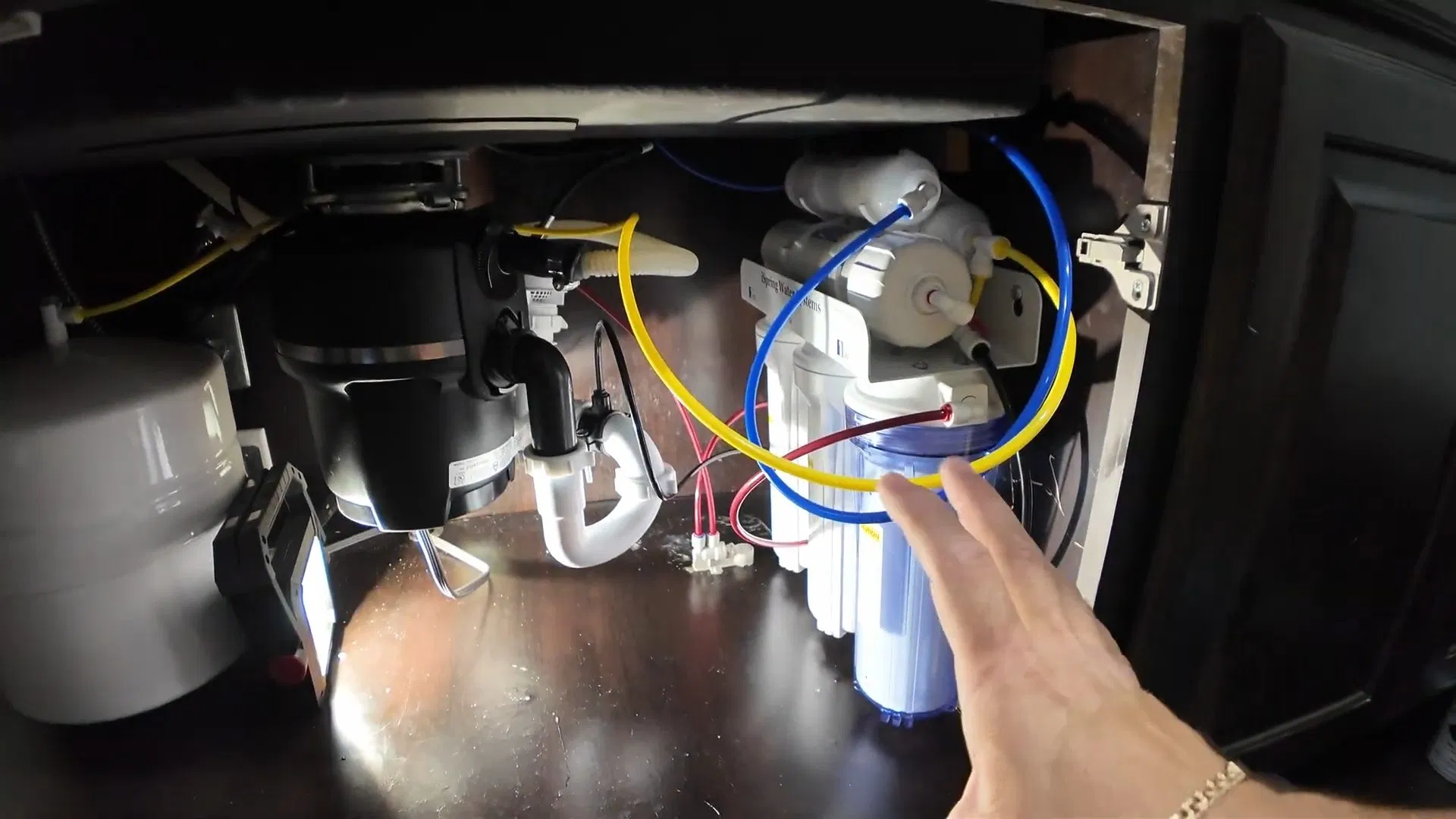
Garbage disposal wiring inside sink cabinet helps narrow the repair to the part of the system that actually needs attention.
Grease and fat, in any quantity, should never go down a disposal or any drain, since they solidify as they cool and coat the inside of pipes, gradually narrowing the effective diameter over months of accumulated buildup. This is true regardless of whether a home is on city sewer or septic, and it's one of the more common preventable causes of a slow kitchen line.
Bones, fruit pits, and eggshells are frequently debated, and the honest answer is mixed: modern disposals can handle small amounts of eggshell and very small bones without immediate damage, but they're not doing the disposal any favors, and larger bones or pits should go in the trash rather than testing the unit's limits.
For a household on Salem's public sewer system, which covers most of the city proper along with Keizer, Turner, and East Salem within the urban growth boundary, ordinary disposal use within these guidelines has no meaningful downstream consequence beyond normal maintenance.
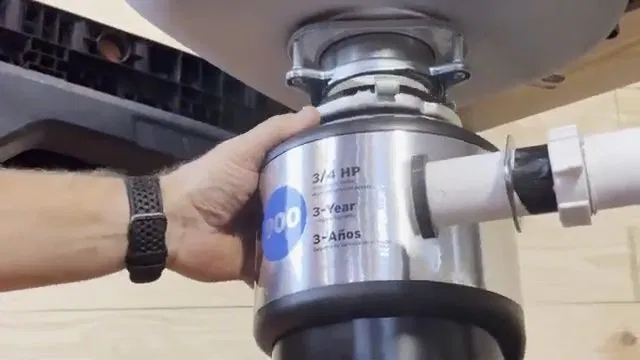
Mounting new garbage disposal under sink gives the plumber a clearer look before the next repair step begins.
For a household on an individual septic system, on the rural fringe outside city sewer service, the calculation changes meaningfully. A disposal adds solid organic material directly into a tank sized and designed around a specific expected solids load, and heavy disposal use accelerates how quickly that tank fills with solids between pumpings, which can shorten the practical interval before the next service is needed. This isn't a reason to avoid a disposal entirely on septic, but it is a real reason to use it noticeably more conservatively, smaller amounts, less often, than a household on city sewer would need to worry about.
A disposal that jams frequently despite following all of the above is worth having looked at rather than continuing to force it, since a chronically underpowered or aging unit straining against normal use is more likely to fail completely at an inconvenient moment than one that's replaced proactively once it's clearly struggling.
Odor coming from the disposal itself, distinct from a septic or sewer smell elsewhere in the house, usually traces back to food particles trapped in the splash guard or the underside of the unit rather than anything structurally wrong. Running the disposal briefly with a few ice cubes and a small amount of dish soap, then flushing with cold water, clears most of this buildup without needing any specialized cleaner, and it's a reasonable monthly habit for any household that uses the disposal regularly.
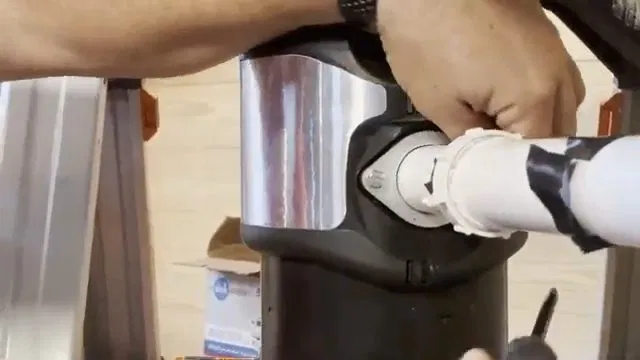
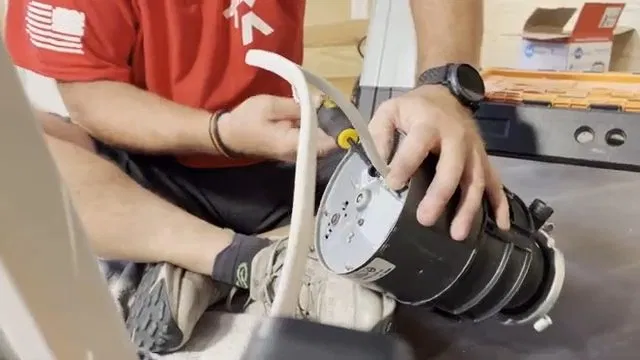
Locking garbage disposal mounting ring can reveal the condition of the connection before parts are replaced.
A disposal that's never actually been used since move-in is worth running briefly on a regular basis even without food to grind, since a completely idle unit can seize slightly from disuse, and a quick, empty test run now and then keeps it ready for when it's actually needed.
A persistent grinding sound with no actual clog present, distinct from the normal operating noise a disposal makes, is worth having checked rather than assumed to be simply how the unit sounds, since it can indicate a loose mounting or a foreign object lodged against the impeller.
None of these guidelines require remembering a long list; the underlying pattern is simple enough to internalize after a few uses: keep it wet, keep portions small, and skip anything fibrous, fatty, or hard enough to resist breaking apart in the hand.
Item
Safe in moderation?
Notes
Small food scraps, soft vegetables
Yes
Run with cold water
Celery, corn husks, onion skins
No
Fibrous, causes jams
Grease or fat, any amount
No
Coats pipes, causes buildup
Small eggshells
Limited
Not harmful, not particularly helpful either
Bones, fruit pits
No
Trash instead
Use the disposal noticeably less than a city-sewer household would
Avoid fibrous and fatty waste even more strictly
Ask about pumping frequency if disposal use is regular
Is it true that ice cubes sharpen disposal blades?
Disposals don't actually have blades in the traditional sense, they use blunt impellers, so ice doesn't sharpen anything, though running ice through occasionally can help dislodge minor buildup on the impeller and chamber walls.
Can I pour dish soap down the disposal to help it run smoother?
A small amount occasionally is harmless, but it's not a substitute for avoiding grease and fibrous waste in the first place, and it won't meaningfully offset the effect of putting the wrong things down regularly.
How do I know if my septic system's problems are related to disposal use?
Faster-than-expected solids buildup requiring more frequent pumping is the main sign, though a septic professional can assess tank condition directly rather than guessing based on symptoms alone.
Is it worth upgrading to a more powerful disposal unit?
If the current unit jams frequently even with careful use, a higher horsepower replacement can meaningfully reduce jams for a household that cooks often, though it doesn't change the fundamental list of things that shouldn't go down any disposal.
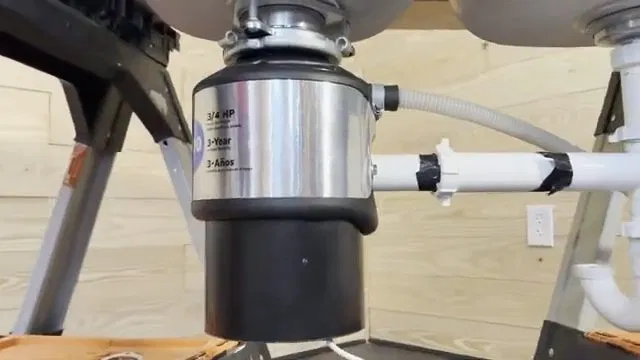
Wiring garbage disposal terminal compartment makes it easier to confirm the problem before the line is put back into service.
Chemical Drain Cleaner or a Call: What Actually Makes Sense
Short answer: a chemical cleaner is a reasonable one-time try on a single slow fixture drain. It's the wrong move on a main line clog, an older pipe, or anything that's already been tried once without success.
Hydro Jetting vs. Snaking: Which Does Your Line Need?
Short answer: snaking clears a path through a clog. Jetting cleans the whole pipe wall. A single isolated clog usually just needs snaking; recurring clogs, root intrusion, or grease buildup usually need jetting.